


Rain changes the small routines that keep a home comfortable. Shoes bring in mud, laundry takes longer to dry, and a blocked drain can send water toward the wrong doorway. A little preparation before a rainy spell makes daily cleaning easier and helps you notice problems while they are still small.
Kenya’s rainfall varies by region and year, so use local forecasts rather than relying on a fixed calendar. The Kenya Meteorological Department issues weather warnings and flood information. Follow those updates for your county, especially if your home is near a river, on a steep slope or in a low-lying neighbourhood.
Check the outside first
Walk around the property when the ground is dry. Look at gutters, downpipes, drains and channels. Remove leaves and loose rubbish where it is safe to reach them. Water should flow away from entrances and foundations, not pool beside the house. If a drain is damaged or blocked below the surface, arrange repair rather than repeatedly pushing debris into it.
Do not climb onto a wet roof to clear a gutter. Roof edges, ladders and tiles become dangerous in rain. If a gutter is high or difficult to reach, use a trained maintenance person with suitable equipment. Trim only branches that can be handled safely from the ground; leave large or unstable trees to qualified workers.
Check door thresholds, window frames and roof areas for gaps or signs of leaks. A small stain on a ceiling may point to water entering somewhere above it. Note when it appears and whether it grows after rain. Protect furniture and electronics from an active leak, then arrange a proper inspection. Covering the stain alone will not fix the source.
Make an entry area that contains mud
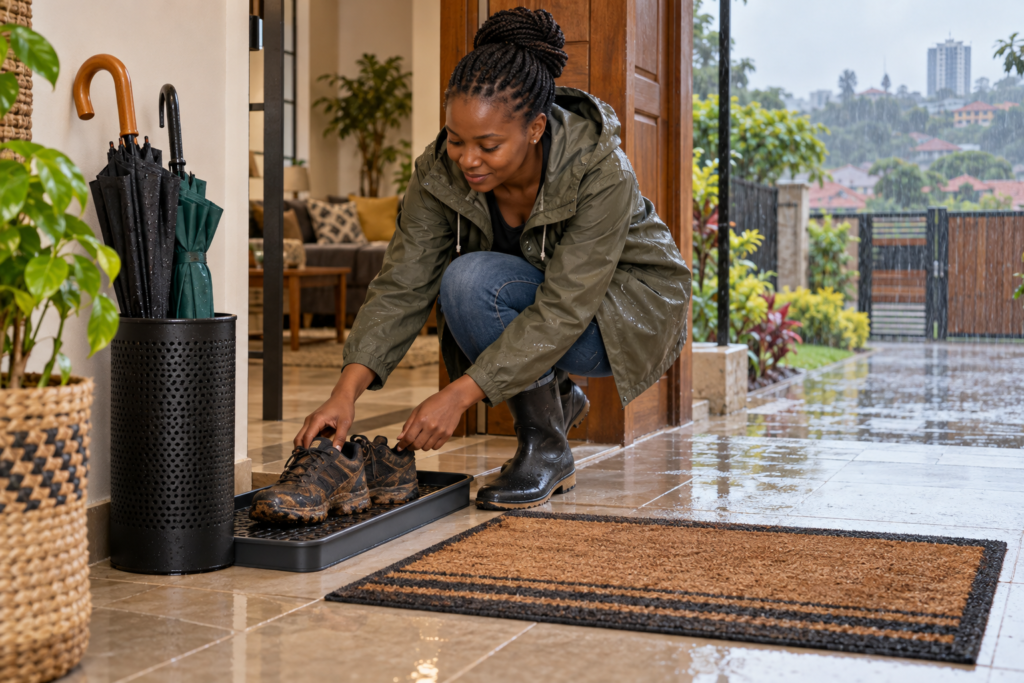
Choose one entrance for wet shoes when practical. Place a sturdy mat outside and an absorbent mat or washable tray just inside. Keep a shoe rack nearby and set a basket for umbrellas. These simple items stop grit spreading through the house, where it can scratch floors and add work to sweeping.
Wipe the entry area often instead of waiting for mud to dry into a hard layer. Sweep grit before mopping so it does not get dragged across the floor. Use a floor cleaner suitable for the surface, and avoid leaving puddles on polished tile or wood. If the floor remains damp, open a window or use airflow when conditions allow.
In a shared home, agree where wet clothes, shoes and bags should go. A small routine helps everyone: remove footwear at the entrance, hang raincoats where they can drip safely, and move wet items to dry as soon as possible. Keep walkways clear so a damp floor does not become a trip hazard.
Keep laundry and bathrooms aired
During rainy stretches, clothes may take longer to dry. Hang them with space between pieces and use a ventilated room. If using an indoor drying rack, avoid blocking vents or placing wet clothes directly against painted walls. Check collars, seams and thick fabrics before storing them; clothing that still feels damp can develop an unpleasant odour.
Bathrooms also need airflow. After bathing, remove standing water from the floor, hang towels so they can dry and open a window or run an extractor fan if available. Watch for persistent condensation, musty smells or dark patches around ceilings and window frames. These signs can point to excess moisture or a leak. Address the moisture source and clean small affected areas using appropriate precautions; extensive mould or repeated water damage may need professional assessment.
Protect stored items and cleaning supplies
Move cardboard boxes, spare bedding, books and important papers away from floors in areas where water could enter. Use shelves or closed storage bins. Keep cleaning products in their original labelled containers and in a dry place away from children and pets. Check that mop heads and cloths dry between uses; a closed bucket of damp tools can smell quickly.
Store a basic cleanup kit where you can reach it: old towels, a mop, a bucket, gloves and waste bags. Keep a torch and charged phone accessible if storms are expected. Do not store electrical devices on the floor in a room that has flooded before.
If water enters the house
Safety comes first. Avoid walking through moving water and do not touch electrical equipment if it is wet or you are standing in water. If you can switch off power safely from a dry location, do so; otherwise keep away and contact the appropriate utility or emergency service. Floodwater may contain sewage, chemicals, debris or hidden electrical hazards.
After water recedes, wear protective footwear and gloves before handling wet items. Separate things that can be dried from items that are contaminated or badly damaged. Ventilate the space when outdoor air is safe and conditions permit. Clean and dry wet areas promptly to limit ongoing moisture problems. If water came from a drain or flood, or if the affected area is extensive, seek professional guidance before cleanup.


Kenya Meteorological Department warnings advise people to avoid driving or walking through moving water and to remain alert for flash floods, including downstream areas. Check its current bulletin rather than assuming a nearby clear sky means the route is safe. If authorities advise evacuation, follow their direction and use a safe route.
A simple weekly rainy-weather check
- Clear accessible drains and inspect gutters from the ground.
- Check ceilings, window edges and exterior walls for new damp marks.
- Wash and dry entry mats; keep a clear place for wet shoes and umbrellas.
- Air bathrooms and laundry areas, and dry towels before storing them.
- Check local weather updates and move valuables away from known leak areas.
Preparing for rain does not require a major renovation. Clear water routes, a mud-control spot near the door and a habit of checking for leaks can save time through a wet week. When a repair involves a roof, wiring, deep drainage or unsafe access, bring in a qualified professional. The safest home routine includes knowing when a job is beyond ordinary cleaning.
Useful references
- Kenya Meteorological Department: weather warnings.
- Ready.gov: flood safety and post-flood cleanup (US guidance; follow Kenyan authorities locally).