


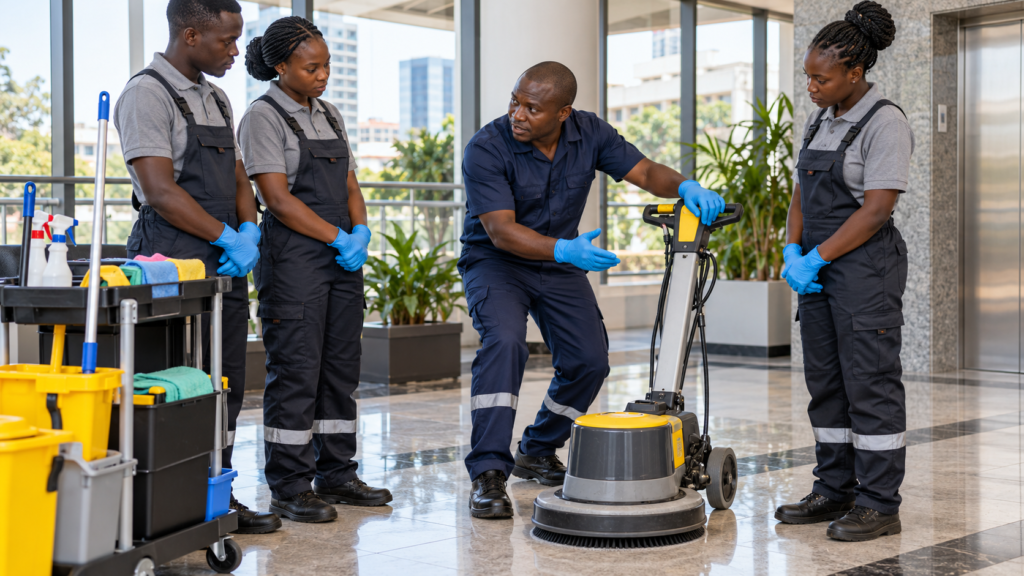
Reliable cleaning depends on a team that understands the work, knows how to do it safely and can raise problems early. A consistent onboarding process helps small firms set expectations from the first shift.
Before the first assignment
- Write a job description that explains duties, work location, hours, reporting line and required skills.
- Use a consistent, fair selection process and verify references appropriately.
- Give each worker written terms and keep accurate employment records.
- Explain attendance, leave, pay, conduct, client privacy and the process for reporting hazards or incidents.
Use the current Ministry of Labour laws and regulations page as a starting point for checking the applicable Employment Act, occupational safety and work-injury framework. Seek qualified advice where you need to interpret an individual situation or current obligations.
Train for the actual site
Show staff the site-specific task sequence, colour or area separation system, chemical labels and safety data sheets, PPE, dilution method and safe storage. Demonstrate how to report a spill, damaged equipment, near miss or client concern. Ask each person to demonstrate key tasks instead of relying only on a sign-off sheet.


Keep supervision practical
Use a short shift checklist, named supervisor and regular feedback. Record completed training and refresher sessions. Review recurring missed tasks with the team and correct the process—unclear supplies, unrealistic time or poor access may be the cause.
Employment and safety requirements can change and depend on the working arrangement. Confirm current requirements with the responsible authorities or a qualified employment professional before relying on a checklist.