


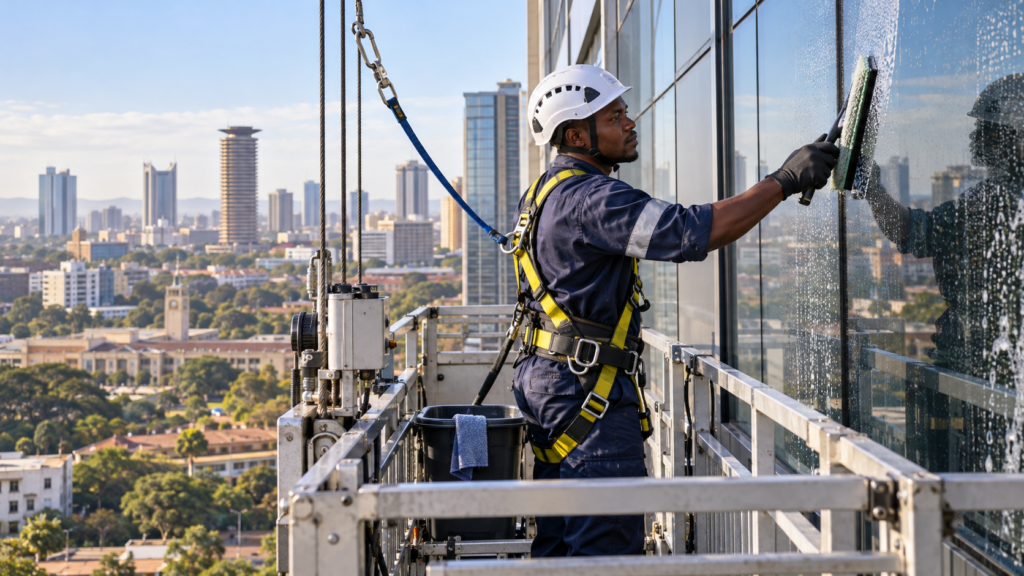
Clean windows change how a room feels. In a home, they let in more daylight. At a shop or office, they help a building look cared for. Behind a streak-free pane is often a trained window cleaner who has planned the work, chosen the right tools and checked the risks before starting.
People sometimes call window washers superheroes because they work above the ground. The comparison is fun, but the real skill is preparation. A good professional does not rely on courage or improvisation. They assess the building, select an appropriate access method and stop when conditions make the job unsafe.
What professional window cleaners do
The work includes more than wiping glass. A cleaner may remove loose dust and grit, wet the pane with a suitable solution, agitate marks, then remove the water with a squeegee. Frames, sills and tracks may need separate attention. Exterior jobs can also involve checking access, protecting people below, and coordinating with a building manager or security team.
Each surface needs a sensible method. Tinted, coated, textured or older glass may react differently to abrasion and chemicals. Staff should identify the surface where possible and follow the product maker’s directions. A small test in an inconspicuous area can help when the material or finish is uncertain. Metal frames, painted timber and seals also need care; a strong cleaner or rough pad can damage them.
For ground-level work, a simple kit may include a bucket, applicator, squeegee, clean cloths, scraper designed for glass and a warning sign. Tools should be clean and in good condition. Grit trapped in a cloth or blade can scratch glass, while a worn rubber edge can leave lines. Professionals check equipment and replace damaged parts instead of trying to finish with faulty tools.
Safety starts before anyone climbs
Work at height can cause severe injury. The first question is whether the windows can be cleaned from a safe position on the ground, from inside, or with another method that avoids climbing. Water-fed poles, where appropriate for the building and glass, can reach some upper windows from ground level. They do not suit every design, water condition or task, so the team should assess the job rather than assume one tool solves every access problem.
If a worker must leave the ground, the employer or contractor needs a planned system suited to the building. Ladders, mobile elevating work platforms, scaffolds and rope-access systems have different limits and require suitable training, inspection and controls. A ladder is not automatically safe because the task is short. The ground, weather, reach, nearby traffic and the worker’s ability to maintain stable contact all matter.
Suspended platforms and rope systems depend on sound anchorages and equipment. Workers should not attach themselves to an unverified point or improvise a rig. The US Occupational Safety and Health Administration’s guidance for suspended scaffolds treats anchorage, platform stability, electrical hazards, training and independent fall protection as separate safety concerns. These are useful reference topics, but US rules do not replace Kenyan law or a site-specific assessment. Kenya’s Directorate of Occupational Safety and Health Services provides information on work-at-height training and workplace safety services.
Before work begins, the crew should agree on who is in charge, how the public area will be kept clear, what communication method they will use and what happens if weather changes or equipment fails. A rescue plan matters whenever a worker could be left suspended or unable to reach a safe place. Calling for help after an incident is not a rescue plan.
Weather and the building affect the method
Rain can make ledges and access routes slippery. Wind can swing a suspended platform or make precise work difficult. Bright sun may dry solution quickly and leave marks, while heat can make metal surfaces uncomfortable to handle. A team should consider the forecast and current conditions, then postpone work if they cannot control the risk.


Buildings around Nairobi and other Kenyan towns vary widely: glass office blocks, apartment balconies, shopfronts, shaded courtyards and older buildings with limited access all need different approaches. Nearby power lines, air-conditioning units, open windows, pedestrians, parked vehicles and landscaping can change the plan. The team should inspect from the ground and, when needed, speak with the facilities manager before bringing equipment onto site.
Put barriers or signs where people might walk beneath the work area. Keep buckets, hoses and cables from creating trip hazards. Protect plants and nearby finishes from runoff if the cleaning solution or dirt could harm them. Ask occupants to close windows and move items away from the work area. These small steps prevent avoidable complaints and interruptions.
How to choose a window-cleaning service
Ask the provider how they will access each part of the building, who will supervise the job and what happens if weather or site conditions change. For elevated work, ask how the team confirms the anchor points and equipment are suitable, what training workers have for the method being used, and how they will protect people below. A professional should be able to explain the plan in plain language.
Also agree on the scope: inside or outside glass, frames, sills, screens, high panes, balconies and difficult spots may be priced or handled separately. Ask whether water supply and access need to be provided by the client. Make sure the schedule accounts for business hours, tenants and security procedures. A clear written scope reduces disagreement about what “clean the windows” includes.
For a commercial project, it helps to record the number and type of windows, access restrictions, visible stains and any fragile finishes before the crew arrives. Our guide to planning a commercial window-cleaning project covers the details a site manager can prepare. For broader facility routines, see a practical hospital environmental-cleaning routine; its focus is different, but it shows why clear responsibilities and repeatable checks matter in managed buildings.
What good work looks like
At the end of the job, check the glass from more than one angle and in natural light when possible. Look for missed corners, drips on frames and marks on sills. Confirm that barriers and equipment have been removed, windows are secured, and access areas are left tidy. Report any pre-existing damage or unexpected issue to the client rather than hiding it under a last-minute wipe.
Professional window washers combine practical technique with judgement. They know when a simple squeegee is enough, when a specialist method is needed, and when the safest decision is to wait. That careful work is what keeps windows clear and people protected.
Further safety references
- OSHA: suspended scaffold safety topics (United States reference).
- Kenya DOSHS information on occupational safety and work-at-height training.